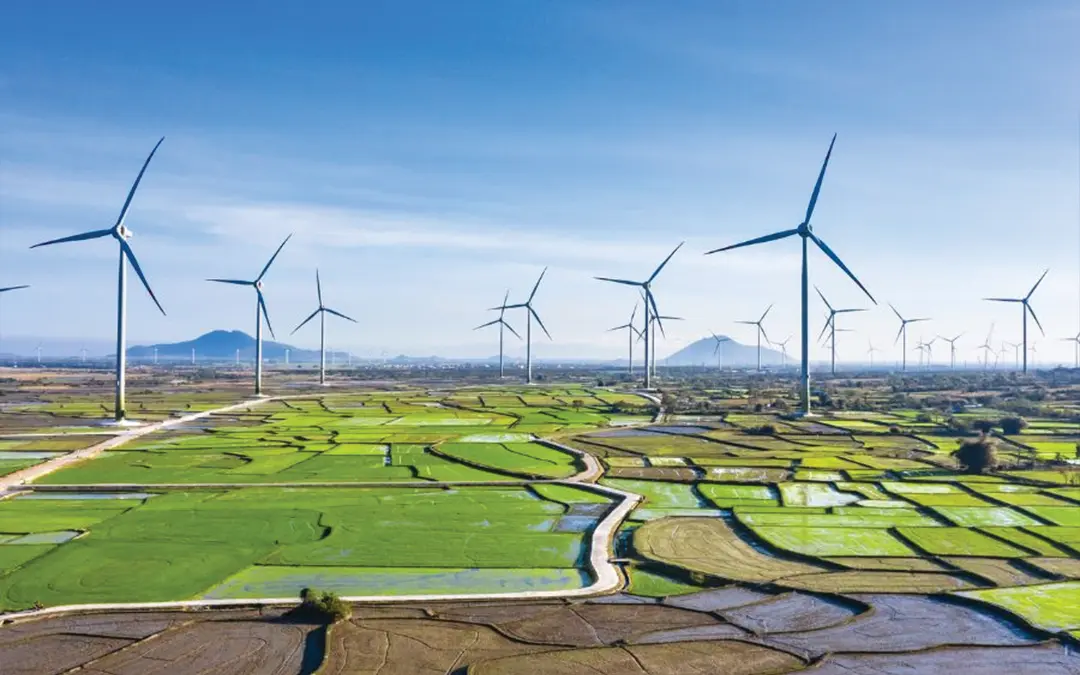
India has cemented its status as a global leader in the clean energy transition, achieving a key national climate target five years ahead of schedule. This achievement, confirmed by the Ministry of New and Renewable Energy, underscores the nation’s commitment to balancing rapid economic growth with environmental responsibility.
Non-Fossil Fuel Target Surpassed
The major milestone achieved is the Nationally Determined Contribution (NDC) set under the Paris Agreement:
- The Goal: To have 50% of India’s total installed electricity generation capacity derived from non-fossil fuel sources by the year 2030.
- The Achievement: India crossed this 50% threshold in July 2025, five years ahead of the 2030 target. This non-fossil capacity now totals over 250 Gigawatts (GW), driven primarily by solar and wind power.
- Global Recognition: The accomplishment has been publicly lauded by the UN Development Programme (UNDP), whose chief noted that India’s model demonstrates that economic expansion and social inclusion can advance together, with technology creating a blueprint for sustainability.
Solar Power Leads the Boom
The expansion of solar energy has been the central pillar of this success:
- Solar Dominance: India’s installed solar capacity has reached nearly 130 GW (as of October 2025), making it the fastest-growing sector in the energy mix. Solar alone contributes over 25% to India’s overall power mix.
- Manufacturing Strength: The success is supported by the Production Linked Incentive (PLI) scheme, which has boosted domestic solar module manufacturing capacity to over 116 GW, reducing reliance on foreign imports and creating local jobs.
- People-First Initiatives: Schemes like the PM Surya Ghar: Muft Bijli Yojana (targeting rooftop solar for one crore households) and PM-KUSUM (solar pumps for farmers) are crucial to democratizing power generation and linking clean energy directly to public welfare and improved rural incomes.
This accelerated transition not only helps reduce India’s carbon footprint but also delivers broad benefits, including improved energy access, cleaner air, and a greater sense of security in the energy supply chain. The early achievement firmly positions India as a frontrunner in the global race to Net-Zero.
Discover more empowering stories and insightful content like this on YOUxTalks, your go-to destination for inspiration and knowledge.
Follow YOUxTalks on Instagram: https://www.instagram.com/youxtalks