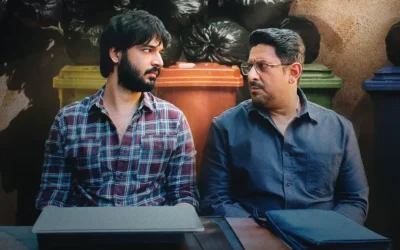
Turning macroeconomics, sovereign debt, and foreign exchange reserves into a mainstream cinematic thriller is an ambitious mountain to climb. With Governor: The Silent Saviour, director Chinmay Mandlekar attempts to bypass the typical uniform-clad patriots to honor the desk-bound bureaucrats who saved India from total collapse in 1991.
However, despite its unique canvas, the film struggles to decide whether it wants to be a nail-biting, ticking-clock procedural or a simplified, politically motivated lecture.
The Plot: A Race Against Bankruptcy
The narrative plunges the audience into the high-stakes, pre-liberalization era of the early 1990s. The fallout of the US-Iraq War has sent oil prices skyrocketing, leaving India’s foreign exchange reserves dangerously depleted. With bankruptcy knocking on the door, the newly appointed Prime Minister Chandra Shekhar drafts a straight-talking, pragmatic outsider, A. Ramanan (Manoj Bajpayee), to take the helm as the Governor of the apex bank.
Ramanan’s immediate mandate is terrifying: find a way to patch a bleeding economy while steering through a fragile minority coalition government at home and intense pressure from global financial institutions abroad. Alongside his trusted Deputy Governor, C. Rangarajan (Noushad Mohamed Kunju), Ramanan is forced to consider the ultimate, politically radioactive last resort—pledging and physically airlifting the nation’s gold reserves to secure emergency loans.
What Works: Quiet Bureaucratic Steel and Intimate Moments
- Manoj Bajpayee’s Masterclass: Operating firmly within his elite element, Bajpayee carries the entire weight of the production. He wisely avoids theatrical, crowd-pleasing speeches, choosing instead to portray Ramanan as a calm, collaborative, and deeply exhausted public servant who carries immense historical pressure behind a quiet smile and an even gaze.
- The Bureaucratic Brotherhood: The finest written segments of the film belong to the quiet interactions between Bajpayee and Noushad Mohamed Kunju. Kunju brings incredible artistic finesse and credibility to the role of the Deputy Governor, and their grounded partnership provides the only genuine emotional anchor in the boardroom.
- Intimate Domestic Textures: The movie hits its highest dramatic marks when it scales down. A beautifully quiet scene where Ramanan’s wife, Vandita (Madhoo), talks about her own gold earrings brings a deeply human, recognizable middle-class weight to the abstract concept of national gold reserves.
Where the Film Falters: The “Textbook” Trap and Selective History
Despite a driving, tense background score by Mannan Shaah that desperately tries to inject adrenaline into boardroom meetings, Governor falls into major structural traps.
- Exposition Over Experience: The screenplay spends far too much time explaining the macroeconomic crisis rather than letting the audience experience the real-world panic. Characters frequently gather around childlike diagrams and whiteboards to debate fiscal policy with the energy of sports fans discussing match tactics. At its worst, it feels less like immersive cinema and more like a loud public awareness commercial.
- Heavy Political Bias & Reductionism: A major point of criticism across primary media outlets points to the film’s unsubtle, heavily biased political agenda. The script goes completely out of its way to aggressively blame past Congress administrations for the mess while entirely erasing or marginalizing the historic, collaborative contributions of actual key architects like Manmohan Singh, Yashwant Sinha, and Subramanian Swamy to present Ramanan as a single, flawless savior.
- Caricatured Backdrops: To ensure Bajpayee stands tall, the director surrounds him with flat, reactive supporting characters. Adah Sharma’s role as the relentless journalist Aditi Verma feels deeply cliché and underwritten, serving primarily as an instrument for the film to paint an inquisitive press as a national security liability.
The Verdict
Governor: The Silent Saviour deserves immense credit for bringing an often-ignored, vital chapter of India’s economic history to the silver screen. However, by substituting complex, layered intellectual debates with simplistic political finger-pointing and repetitive, talky lecture scenes, it runs out of steam long before the final frame. Come strictly for Manoj Bajpayee’s flawless acting, but keep your expectations for a true financial thriller grounded.
TL;DR / Key Facts
- The Release: Directed by Chinmay Mandlekar (Inspector Zende), the historical economic thriller Governor: The Silent Saviour opened in theaters across India on Friday, June 12, 2026.
- The Backdrop: Produced by Vipul Amrutlal Shah, the 122-minute narrative chronicles India’s harrowing 1991 Balance of Payments crisis, where the nation was forced to airlift its gold reserves to stave off bankruptcy during the Gulf War.
- The Lead Role: Manoj Bajpayee delivers a restrained, powerful performance as IAS officer A. Ramanan—a fictionalized version of former Reserve Bank of India (RBI) Governor S. Venkitaramanan.
- The Cast: Features Noushad Mohamed Kunju as the Deputy Governor, Adah Sharma as a persistent investigative journalist, and Madhoo as Ramanan’s wife.
- Critical Consensus: Deeply polarizing. While critics praise the unique premise and Bajpayee’s performance, the film is widely criticized for prioritizing tedious, classroom-style economic explanations over gripping drama, as well as pushing a heavily biased political narrative.
Discover more empowering stories and insightful content like this on YOUxTalks, your go-to destination for inspiration and knowledge.
Follow YOUxTalks on Instagram: https://www.instagram.com/youxtalks