Turning a historic meteorological debate into a nail-biting, edge-of-your-seat theatrical thriller sounds like an impossible task on paper. Yet, with Pressure, director Anthony Maras manages to strip away the traditional battlefield glory of World War II to honor the exhausting, data-driven warfare fought by exhausted men staring at barometric charts in smoke-filled rooms. It is a taut, disciplined chamber piece that proves watching high-stakes competency under pressure can be just as thrilling as any traditional action sequence.
The Narrative: A War Against the Skies
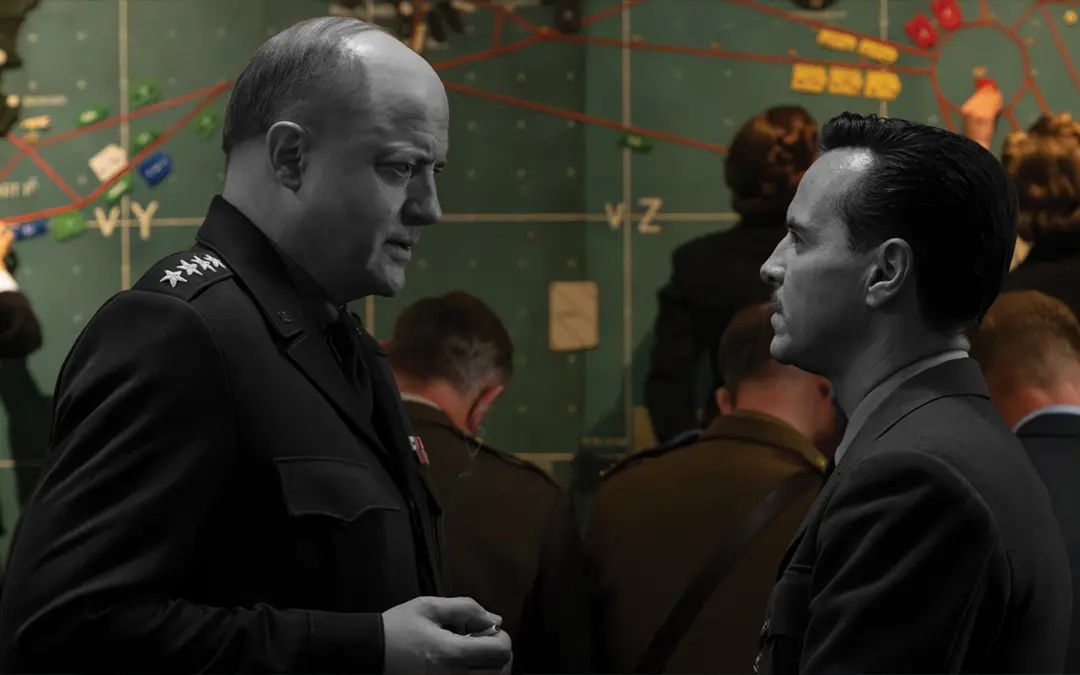
The film locks the audience into June 1944 at Southwick House, the rural English headquarters of the Allied forces. General Dwight D. “Ike” Eisenhower (Brendan Fraser) has amassed the largest seaborne invasion force in human history, tentatively scheduled to cross the English Channel to Normandy on June 5th. Millions of lives and the entire direction of the war hinge on the execution, but one terrifying variable remains completely out of the military’s control: the volatile European weather.
Enter Group Captain James Stagg (Andrew Scott), a rigid, fiercely anti-social Scottish scientist appointed as the chief meteorologist. Stagg immediately finds himself trapped in a brutal battle of egos against Colonel Irving P. Krick (Chris Messina), Eisenhower’s trusted personal weather advisor.
Relying on historical analogues from past campaigns, Krick confidently predicts clear, sunny skies perfect for the invasion. Stagg vehemently disagrees, tracking a monstrous, unprecedented storm system barreling toward the Channel. With the generals demanding a unified recommendation and the clock rapidly ticking down, Eisenhower is forced to weigh conflicting data and make a choice that will either secure an Allied victory or lead thousands of young soldiers to a watery grave.
What Works: A Masterclass in Restraint and Intellectual Friction
- Andrew Scott’s Quiet Seething: Carrying the emotional core of the production, Scott is absolutely brilliant. He rejects the typical Hollywood trope of the charming, eccentric genius, choosing instead to portray Stagg as an irritable, deeply stubborn realist who cares about raw data over being liked. Scott plays him with a remarkable, quiet steel, conveying immense internal panic through small cracks—like the constant twitching of his hand toward his wedding ring as he worries about his pregnant wife stuck in a bombed-out London hospital.
- Brendan Fraser’s Vulnerable Weight: Fraser delivers a deeply human, layered portrayal of Eisenhower. Rather than presenting a flawless, untouchable historical icon, Fraser lets you see the exhaustion and crushing psychological burden hiding behind Ike’s expressive, heavy eyes. Haunted by the recent real-life friendly-fire tragedy of Exercise Tiger, his Eisenhower is a desperate, commanding leader searching for a drop of certainty in an ocean of doubt.
- The Scientific Battlefield: The screenplay by Maras and David Haig excels when it treats meteorology like a tactical sport. The intellectual clashes between Scott’s scientific method and Messina’s cocky, analogue-driven hubris are crackling with energy, transforming simple boardroom debates into a gripping, psychological submarine thriller.
- Taut Technical Execution: Clocking in at a tight 100 minutes, the film moves with exceptional discipline. Cinematographer Jamie D. Ramsay bathes the frame in a gorgeous, soft-filtered palette of cool military blues and jacket greens, while Maras’s sharp editing maintains a persistent, invisible ticking-clock atmosphere beneath every single conversation.
Where the Film Faces Friction
While the boardroom dynamics are flawless, the film stumbles slightly when it attempts to scale up its cinematic footprint in the final stretch.
- The Third-Act Action Shift: Once the fateful decision is made and D-Day officially begins, the narrative shifts from its tight chamber format to briefly dramatize the Normandy beach landings. While Maras cuts back and forth effectively between the operational war rooms and the beaches, the visual effects and ground action inevitably invite direct, losing comparisons to the benchmark scale of Saving Private Ryan.
- Underwritten Perspectives: Despite a characteristically warm and intelligent performance by Kerry Condon as Kay Summersby, the screenplay struggles to give her anything truly vital to do beyond acting as a buffer for the men’s tempers or providing Stagg with structural empathy during his domestic subplots.
The Verdict
Pressure is a masterfully crafted, exceptionally acted historical drama that succeeds by honoring the unglamorous brilliance of experts operating under impossible stakes. Anchored by a career-defining performance from Andrew Scott and a deeply moving turn from Brendan Fraser, it stands tall as a refreshing, highly intellectual alternative to standard summer blockbusters. If you appreciate taut historical procedures, brilliant character friction, and pure cinematic tension, this is a must-watch.
TL;DR / Key Facts
- The Release: Directed by Anthony Maras (Hotel Mumbai), the intense World War II historical chamber drama Pressure debuted in global theaters via Focus Features on Friday, May 29, 2026.
- The Blueprint: Adapted from David Haig’s acclaimed 2014 stage play, the 100-minute ticking-clock procedural chronicles the agonizing 72 hours leading up to D-Day, tracking the immense burden behind the weather forecast that determined the fate of Operation Overlord.
- The Elite Face-Off: Andrew Scott delivers a powerhouse, highly praised performance as Scottish meteorologist Group Captain James Stagg, squaring off against Brendan Fraser as Supreme Allied Commander General Dwight D. “Ike” Eisenhower.
- The Supporting Cast: Features Chris Messina as Stagg’s confident American rival Irving P. Krick, Kerry Condon as Eisenhower’s indispensable secretary Kay Summersby, and Damian Lewis as the sharp British General Bernard “Monty” Montgomery.
- Critical Verdict: Generally highly positive (sitting at a solid 4/5 consensus). Critics hail it as an exceptional “competency procedural” driven by a masterclass from Andrew Scott. While some note that the third-act D-Day action sequence inevitably shrinks in the shadow of Saving Private Ryan, the film is widely celebrated as elite, high-tension history drama.
Discover more empowering stories and insightful content like this on YOUxTalks, your go-to destination for inspiration and knowledge.
Follow YOUxTalks on Instagram: https://www.instagram.com/youxtalks