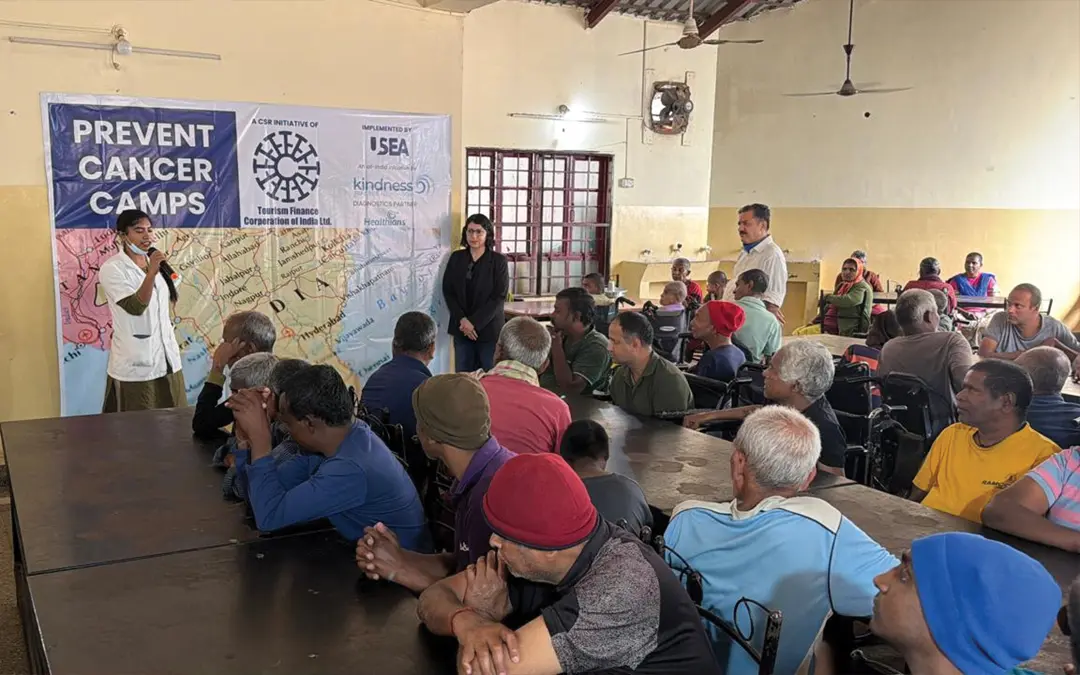
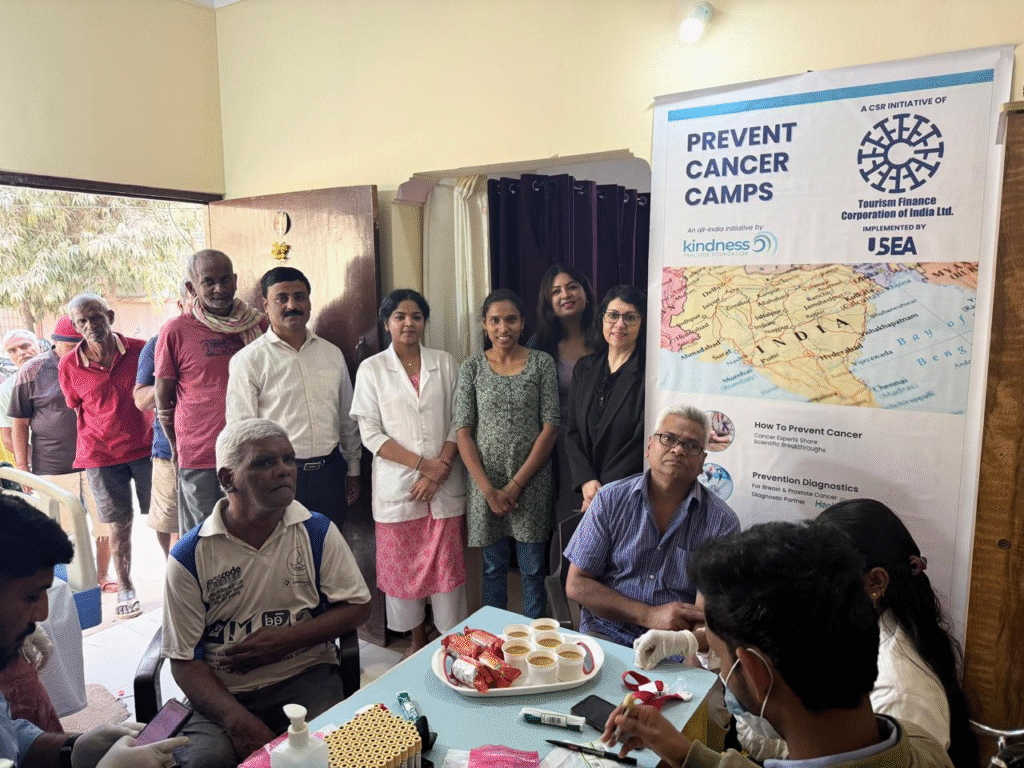
Kindness Practice Foundation, in collaboration with the Tourism Finance Corporation of India (TFCI) under its Corporate Social Responsibility (CSR) programme, successfully conducted its 7th Cancer Education and Screening Camp at AiR Humanitarian Homes, a Bengaluru-based NGO providing care for over 800 abandoned, destitute, and homeless individuals. The foundation focuses on underserved and underprivileged communities to create awareness on cancer prevention and reducing the burden of cancer with early detection and successful outcomes.Earlier, the foundation has conducted camps in slums of Mumbai, villages in Haryana, remote areas in Kerala and plans to conduct similar camps in Hyderabad, Goa, and Chennai.
Globally, breast cancer remains the most common cancer among women, with a projected rise to 3.2 million new cases annually by 2050, disproportionately affecting low‑ and middle‑income regions. Breast cancer is now the fastest-growing cancer among Indian women [ICMR], with an estimated annual increase of 5.6% to 6%. Studies from 2025 and early 2026 highlight that while overall urban averages appear high, prevalence is increasing in slum settings. Nearly 50% of cases in India occur in women aged 25–50, a much younger demographic than typically seen in Western countries [ICMR].
“Obesity, high stress levels, environmental degradation and poor nutrient quality are some of the key factors that increase inflammation and disrupt male and female hormones to trigger breast and prostate cancers across the country,” explains Dr Rachna Chhachhi, Integrative Cancer expert and founder, Kindness Practice Foundation. “Prevention is key and early detection programmes save lives. We are grateful to Tourism finance Corporation for supporting us in this initiative.”
The program attacked the causes via a high‑impact session on cancer prevention, nutrition, and inflammation reduction—key factors influencing cancer risk as identified by Indian and global health research. [Danforth D. N. (2021). The Role of Chronic Inflammation in the Development of Breast Cancer]
The visit revealed inspiring examples of community-led health resilience. Radha Maa, who manages the home’s kitchen, showcased their nutritious vegetarian meals rich in vegetables, ragi, and protein, demonstrating how diet directly supports cancer prevention. Slow yogic breathing techniques—demonstrated to reduce inflammation and pain—were explained by yoga and rehab therapist, Ms Aradhna, further reinforcing holistic health practices.
This initiative was partnered with USEA and diagnostic partner Healthians.
Kindness Practice Foundation’s approach reflects global best practices emphasizing education, lifestyle awareness, and early detection, key pillars also championed by NGOs worldwide in bridging cancer care gaps. researchgate.net
A Call to Corporate India: CSR as a Catalyst for Cancer Prevention
As cancer cases in India are projected to rise by 12.8% by 2025, and as women continue to bear a disproportionate burden, the role of CSR becomes mission‑critical.
CSR partnerships enable NGOs to scale screening camps, deploy accessible technologies, enhance health literacy, and provide critical support to underserved populations. Corporates can amplify this impact by funding screening programmes, supporting preventive health education, enabling technology adoption, and mobilising employee volunteers—aligning with CSR strategies that strengthen communities and advance national health goals. [mdpi.com] [jfbs.juw.edu.pk]
About Kindness Practice Foundation
Kindness Practice Foundation is a section 8 company which focuses on reduction in noncommunicable diseases like cancer, cardiovascular disease, type to diabetes, obesity, auto immune conditions via lifestyle interventions that have been clinically evidence to reduce risk of death from these diseases. Kindness is committed to improving cancer outcomes through preventive education, early screening, and community-based interventions. By taking cancer awareness directly to underserved communities, the Foundation aims to ensure no individual is left behind due to lack of access, information, or resources.
Discover more empowering stories and insightful content like this on YOUxTalks, your go-to destination for inspiration and knowledge.
Follow YOUxTalks on Instagram: https://www.instagram.com/youxtalks