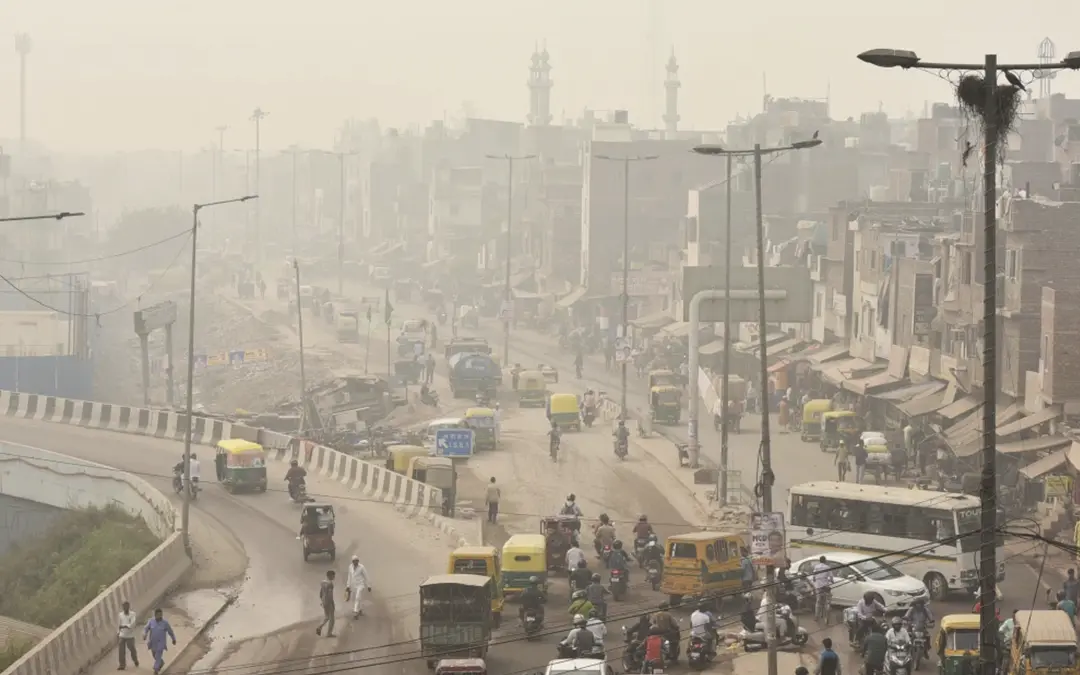
NEW DELHI, INDIA—A startling analysis of real-time air quality data reveals an unprecedented environmental crisis, with India completely dominating the global charts for air pollution. According to live global rankings, 70 of the top 75 most polluted cities worldwide are now located in India, underscoring a public health emergency that extends far beyond the usual megacity hotspots.
The crisis, fueled by a dangerous cocktail of seasonal factors like stubble burning, dropping temperatures, and low wind speeds, has pushed Air Quality Index (AQI) levels deep into the “Severe” and “Hazardous” categories across the country.
Small Towns Face Extreme Hazardous Levels
While megacities like Delhi and Kolkata struggle, the most alarming readings are coming from smaller, semi-urban centers in Uttar Pradesh (UP), Punjab, and Haryana. These towns are registering AQI levels rarely seen, making the air immediately dangerous to breathe:
- Siktaur (UP): Has recorded AQI levels exceeding 1000 on certain days, falling into the highest possible “Hazardous” range. As of today, the AQI is holding around 678 in the hazardous range.
- Khalilabad (UP): Has seen AQI surge to over 842 in recent days, also indicating extremely hazardous conditions.
- Balloh (Punjab): Along with other regional cities like Barnala and Faizabad, air quality has remained perilously high, frequently crossing the 500 mark.
For reference, an AQI above 500 signifies the “Severe-Plus” or “Hazardous” level, where everyone is likely to experience serious health effects.
The Regional Pollution Crisis
The concentration of pollution in North India is primarily attributed to regional factors that worsen in early winter:
- Stubble Burning: The widespread practice of burning agricultural residue in Punjab, Haryana, and UP releases massive plumes of smoke that travel with North Westerly winds directly into the heart of the Gangetic Plain.
- Low Wind Speeds: Cooler temperatures and calm weather prevent the dispersion of pollutants, trapping particulate matter (PM2.5 and PM10) close to the ground, leading to the formation of dense, toxic smog.
In the National Capital Region, despite the implementation of the Graded Response Action Plan (GRAP), Delhi’s AQI continues to oscillate between “Very Poor” (301-400) and “Severe” (401-500). The dire situation across smaller towns, however, highlights the need for a national, multi-sectoral strategy rather than relying solely on localized emergency measures.
You can watch this video for more context on the long-term challenges of air pollution in India: Delhi Ranks 4th On List Of Most Polluted Cities; 39 Indian Cities On List.
Discover more empowering stories and insightful content like this on YOUxTalks, your go-to destination for inspiration and knowledge.
Follow YOUxTalks on Instagram: https://www.instagram.com/youxtalks